U.S. Bank is the issuer that breaks the usual framework. There is no 5/24. There is no 2/3/4. There is no 1/8. Ask what U.S. Bank's application rule is and the honest answer is that they do not really have one in the sense that Chase or Citi does.
What they have instead is a genuinely conservative underwriting model that cares about two things most other issuers weight lightly: how much total credit they have already extended to you, and whether you have any relationship with the bank at all.
That makes U.S. Bank harder to plan around than an issuer with a hard rule. A rule you can count against. A judgment call you have to influence.
What U.S. Bank Does Not Have
Clearing the myths first, because a lot of stale content says otherwise:
- No 5/24 rule. Accounts you opened at other issuers do not auto-decline you.
- No published velocity cap. There is no official "one card per six months" policy.
- No hard cap on card count. People hold four or five U.S. Bank cards.
- No family-based bonus restriction. Bonus eligibility is per product.
If you have read that U.S. Bank enforces a "2 in 12" rule, that was community shorthand from several years ago and it was never a coded rule. It described a pattern, not a policy.
The Two Things That Actually Decide It
1. Total credit already extended
U.S. Bank underwrites to a total exposure number. Once the sum of your existing U.S. Bank credit limits reaches what their model thinks is appropriate for your income and profile, additional applications get denied, no matter how good your score is.
This is why the most effective U.S. Bank reconsideration script is not an explanation. It is an offer:
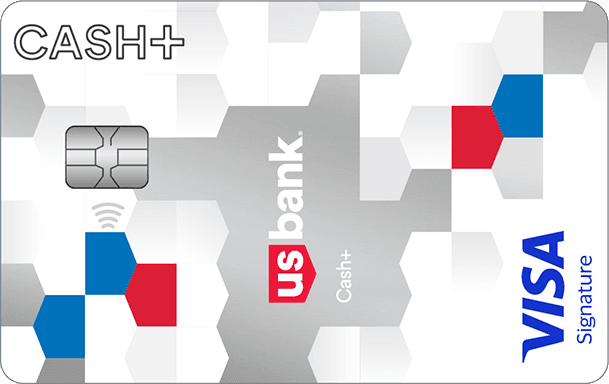
"I understand you can't extend additional credit right now. Would you be able to move $5,000 of the limit from my existing Cash+ card to this new account instead?"
Reallocating an existing limit costs the bank nothing in additional exposure, and it converts a large share of denials into approvals. It is the single highest-value thing to know about applying at U.S. Bank.
2. Whether you are already a customer
U.S. Bank is measurably more willing to approve people who bank with them. A checking or savings account, even a small one, changes outcomes. This shows up in data points constantly: identical profiles, one with a deposit account and one without, different results.
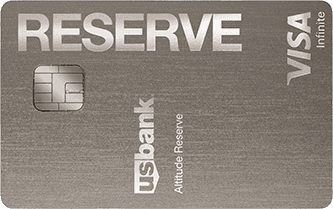
This is most pronounced on the premium end. The Altitude Reserve has historically been difficult or impossible to get without an existing U.S. Bank relationship, and while the requirement is not published, the pattern in approvals is unambiguous.
The practical move: if U.S. Bank cards are part of your plan, open a checking account 60 to 90 days before you apply. It is a soft pull or no pull, and it materially improves your odds.
The 5/12 Pattern
U.S. Bank does not have a velocity rule, but they do look at recent account openings, and the pattern people report is a rough sensitivity around five or more new accounts in the past 12 months.
This is not a coded auto-decline. It is a risk input. Applicants above that threshold get denied more often, get lower limits when approved, and get routed to manual review more frequently.
Treat it as guidance rather than a wall. Unlike Chase 5/24, being over it does not make an application pointless. It makes it worse odds.
Where to Apply From
U.S. Bank is one of the few remaining issuers where the application channel matters.
- Branch applications are handled by a banker who can add context and sometimes push a marginal file through. If you have a branch nearby and a borderline profile, this is the better channel.
- Online applications are more automated and less forgiving.
- Pre-qualification on the U.S. Bank site is a soft pull and reasonably predictive, more so than most issuers' tools. See pre-approval vs pre-qualification.
If you do not live near a branch, U.S. Bank's footprint is a real constraint. Some products have historically been restricted or harder to obtain outside their core Midwest and Western markets.
Bonus Eligibility
U.S. Bank's restriction is simple and unusual: you generally cannot receive a welcome bonus on a card you currently hold. There is no long lookback window like Citi's 48 months or Amex's lifetime rule.
In practice this means:
- Close a card, wait, and reapply, and you are often bonus eligible again
- The commonly reported wait is around 12 months from closure
- Terms vary by product and offer, so read the offer page
This is one of the more permissive bonus structures among major issuers, and it is underused.
The 2026 Lineup, in Flux
U.S. Bank has been actively reshaping its cards, which affects planning:
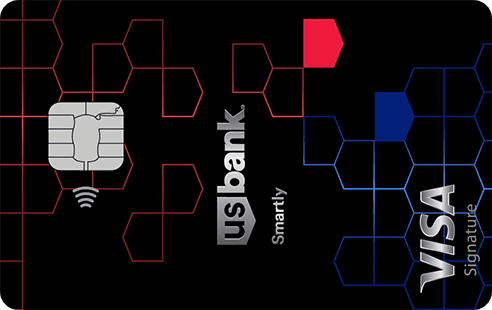
- Smartly Visa Signature is now the centerpiece, with earn rates that scale by deposit and investment balances held at U.S. Bank. It is the clearest expression of their relationship-first strategy.
- The Kroger family co-brands converted to Smartly in May 2026.
- Shopper Cash Rewards was discontinued in July 2026.
- Cash+ remains the most distinctive product in the lineup, with its rotating 5% category selection. Its category definitions are unusually literal, which we cover in U.S. Bank Cash+ explained.
- Altitude Reserve is the premium option, with 3x on mobile wallet spend that remains one of the best broad-category earn rates available.
Business Cards
U.S. Bank business cards do not report to your personal credit report in good standing, which makes them useful for staying under Chase 5/24. They also do not consume personal-side capacity in the same way.
U.S. Bank business approvals lean on the same total-exposure logic, and a business deposit relationship helps for the same reason a personal one does.
Which Bureau
U.S. Bank pulls TransUnion most often, with Experian and Equifax appearing regionally. If you keep your reports frozen, thaw TransUnion first and be prepared to thaw a second. See credit freezes and applications.
How to Actually Get Approved
A sequence that works, in order:
- Open a U.S. Bank checking account and let it season for 60 to 90 days
- Check pre-qualification on their site, which is a soft pull and more honest than most
- Apply for one card, not several, and let it season for at least six months
- If denied, call reconsideration and offer to reallocate a limit rather than arguing the denial
- Ask for a limit increase after six months, which builds the exposure headroom for card two
This is a slower path than Amex or Capital One. U.S. Bank rewards patience and relationship depth in a way that most issuers no longer do.
FAQ
Does U.S. Bank have a 5/24 rule?
No. Accounts opened at other issuers do not trigger an automatic denial. Heavy recent velocity still hurts your odds as a risk factor.
How many U.S. Bank cards can I have?
There is no stated cap. The limit is total credit extended relative to your income, not account count.
Do I need a U.S. Bank account to get approved?
Not formally, and plenty of people are approved without one. It measurably improves your odds, and for the Altitude Reserve it is close to a practical requirement.
What is the best reconsideration script for U.S. Bank?
Offer to move credit from an existing U.S. Bank card to the new one. This addresses the actual denial reason in most cases. See our reconsideration guide.
Can I get the bonus again on a card I closed?
Usually yes, after roughly 12 months. U.S. Bank's restriction is generally about currently holding the card, not a multi-year lookback.
Do U.S. Bank business cards report to personal credit?
Not in good standing. They are useful for staying under Chase 5/24.
Is applying in a branch better than online?
For borderline profiles, yes. A banker can add context and sometimes escalate. For clean profiles it makes little difference.
Does U.S. Bank do hard pulls for credit limit increases?
Requested increases are typically a hard pull. Automatic increases are not.
Why do so many people get denied with good scores?
Because U.S. Bank denies on total exposure, not on score. A 780 score with $60,000 of existing U.S. Bank credit gets denied where a 700 score with $0 gets approved.
Does U.S. Bank use pre-approval mailers?
Yes, and they are more predictive than their generic pre-qualification tool. A targeted mailer is a strong signal.
The Bottom Line
U.S. Bank is not a rules issuer. It is a relationship issuer, and it is a genuinely conservative one.
- Stop looking for the velocity rule. There is not one. Your denial is almost certainly about total credit extended or a thin relationship.
- Bank with them before you apply. A seasoned deposit account is the highest-leverage thing you can do, and it costs nothing.
- On denial, offer to reallocate a limit. This converts more U.S. Bank denials than any argument you can make.
Handled that way, U.S. Bank has some of the most distinctive products available, including the 3x mobile wallet earn on Altitude Reserve and the category selection on Cash+. They are just gated behind more patience than most issuers ask for.