The most common follow-up question to any article about business credit cards is some version of: I do not have a business, so this does not apply to me, right?
Usually it does apply. The bar for "business" on a credit card application is far lower than people assume, and a large share of business card holders are sole proprietors with modest side income and no formal entity at all.
But the bar is not zero, and the difference between "lower than you think" and "nonexistent" is the difference between a legitimate application and lying to a bank. This article covers both halves honestly.
What Actually Counts as a Business
A sole proprietorship is the default legal structure for any individual doing business activity for profit. You do not register it. You do not file anything. If you earn money from an activity with a profit motive, you are already operating one.
Things that genuinely qualify:
- Freelance or contract work of any kind
- Rideshare, delivery, or other gig platform driving
- Selling on eBay, Etsy, Poshmark, Mercari, or Facebook Marketplace
- Tutoring, lessons, coaching, consulting
- Photography, design, writing, editing
- Renting out property, including a room or a parking space
- Pet sitting, babysitting, lawn care, handyman work
- Content creation with any revenue, including affiliate or ad income
- Reselling of any kind
Scale is not the test. Intent to earn is. Someone who sold $400 of used gear on eBay last year with the intention of making money is running a sole proprietorship. Someone who has never earned a dollar and has no plans to is not.
Where the Line Is
Being direct about this, because it matters and most articles on this topic dodge it.
A credit card application is a legal document. Materially false statements on one are fraud. Not "against the terms of service." Fraud, under federal law.What that means in practice:
- Having a small or new business and applying is fine. This is exactly who these products are for.
- Reporting $0 or low revenue is fine. Issuers approve businesses with no revenue constantly.
- Inventing a business you do not have and do not intend to have is not fine. Neither is inflating revenue by a factor of ten.
The good news is that honesty works here. Issuers approve genuine sole proprietors with $0 revenue and no business history routinely, because they underwrite these cards on your personal credit and your personal guarantee. You do not need to embellish anything to get approved.
Filling Out the Application
Here is what each field means for a sole proprietor.
Business name
Your own legal name. If you have a registered DBA ("doing business as"), you can use that instead, but your legal name is the correct and expected answer for an unregistered sole proprietorship.
Business type or structure
Select "Sole Proprietorship" or "Individual." Do not select LLC or Corporation unless you have actually formed one.
Tax ID
Your Social Security number. Sole proprietors without employees are not required to have an EIN, and issuers expect an SSN here.
You can get an EIN for free from the IRS website in about ten minutes if you prefer not to give out your SSN. It does not change your approval odds and it does not make the business more "real" in the issuer's eyes. It is purely a privacy choice.
Years in business
Count from when you actually started the activity. If you started last month, enter 0 years. If you have been freelancing for six years, enter 6. Issuers approve 0-year businesses regularly.
Annual business revenue
Your honest gross revenue from the activity over the past 12 months. If that is $0, enter $0. If it is $3,000, enter $3,000.
This is the field people most want to inflate and the one where inflation is least useful. These cards are underwritten primarily on your personal credit profile, because you are personally guaranteeing the debt. A large revenue number does not offset a weak personal file.
Number of employees
For most sole proprietors, 1 (yourself) or 0. Either is acceptable.
Estimated monthly spend
A reasonable estimate of what you would put on the card. This can include spend you would route through the card, and it is a forecast rather than a commitment.
What the Issuer Is Actually Underwriting
This is the part that makes everything above make sense.
For a small business card, the issuer is pulling your personal credit report, evaluating your personal score and income, and requiring your personal guarantee on the debt. The business details are context, not the decision.
Which means:
- A 750 personal score with a $0-revenue one-month-old sole proprietorship gets approved
- A 620 personal score with a five-year business doing $200,000 in revenue usually does not
If you want to know your odds, look at your personal credit profile, not your business.
Why Bother
Three concrete reasons, in order of how much they matter.
1. Business cards do not count toward 5/24
Chase, Amex, Citi, U.S. Bank, Wells Fargo, and Barclays business cards do not report to your personal credit report in good standing. That means they do not add to your Chase 5/24 count, which is the single most valuable property they have.
Capital One and Discover business cards do report to personal credit and do count. See business cards that don't report to personal credit for the full breakdown.
2. The bonuses are large
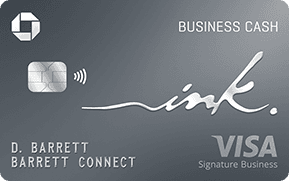
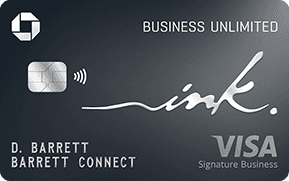
Business card welcome bonuses are frequently the largest available. The Ink family in particular has carried some of the strongest offers in the market for years.
3. They keep business spending off your utilization
Because they do not report to personal credit, a large balance on a business card does not affect your personal utilization. For anyone with variable business expenses, this is a real structural benefit.
Which Issuers Are Easiest
Roughly, from most to least accommodating for a new sole proprietor:
| Issuer | Notes |
|---|---|
| American Express | Most accommodating. Approves $0 revenue and 0 years routinely. |
| Chase (Ink) | Very workable, but you must be under 5/24 to apply. |
| Capital One | Accessible, but reports to personal credit. |
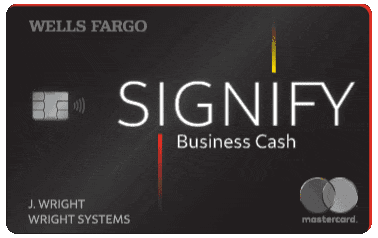
| Wells Fargo | Reasonable, and runs on a separate track from personal applications. |
| U.S. Bank | Conservative, and a business deposit relationship helps. |
| Bank of America | Tends to want more established businesses. |
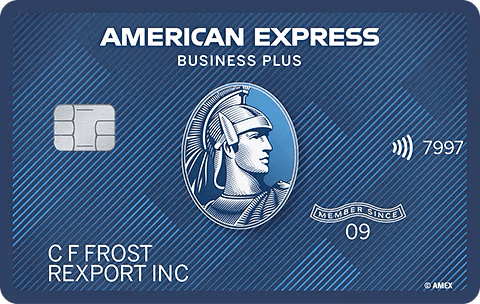
Amex is the standard starting point. Blue Business Plus has no annual fee, earns 2x on the first $50,000 of spend each year, and is one of the most commonly approved first business cards.
Common Mistakes
Forming an LLC because you think you need one
You do not. An LLC costs money, adds annual filing requirements in most states, and does not improve your approval odds on a card underwritten against your personal credit.
Applying for Chase Ink while over 5/24
Chase business cards do not add to your 5/24 count, but you still have to be under 5/24 to be approved for one. This trips people constantly.
Assuming the card will build business credit
Most of these cards do not report to business credit bureaus like Dun and Bradstreet either. They are personal-credit products with a business label. If building a business credit file is your goal, that is a different product category.
Inflating revenue
It does not help, because revenue is not the deciding input, and it is the field most likely to be scrutinized if anything goes wrong.
FAQ
Do I need an EIN?
No. Sole proprietors without employees can use their Social Security number. An EIN is free from the IRS if you want one for privacy reasons, but it does not change your odds.
Do I need an LLC?
No. Sole proprietorship is a valid business structure and is what most business card applicants use.
Can I put $0 for revenue?
Yes, and people are approved this way regularly. Approval is driven by your personal credit.
What if my business is brand new?
Enter 0 years in business. This is common and not disqualifying.
Will the issuer verify my business?
Rarely at application. Some issuers ask for documentation later, usually when something else has already triggered a review. Occupational and revenue details being accurate protects you here.
Do business cards affect my personal credit score?
The hard inquiry does. The account itself generally does not, at issuers that do not report business cards to personal credit. A default would report regardless, because you personally guaranteed it.
Which business cards report to personal credit?
Capital One and Discover report routinely. Most others report only if the account goes seriously delinquent. See our detailed breakdown.
Can I get a business card with a 650 score?
Sometimes, on entry-level products. Business cards are underwritten on personal credit, so a 650 faces the same constraints it would on a personal card.
Does business card spending count toward a personal card's welcome bonus?
No. Each card's spending counts only toward its own bonus. See hitting minimum spend.
Is it fraud to apply as a sole proprietor with a small side hustle?
No. That is a legitimate business. It becomes fraud when you invent activity that does not exist or materially misstate revenue.
The Bottom Line
The gap between "I have a business" and "I do not" is much smaller than most people think, and it is also a real line.
- If you earn money from any activity with a profit motive, you already qualify. Enter your legal name, sole proprietorship, your SSN, and your actual revenue.
- Do not invent a business. You do not need to, because these cards are approved on your personal credit anyway, and the downside is not a declined application.
- The real prize is 5/24 immunity. Business cards from most major issuers let you keep opening accounts without spending your Chase eligibility.
For most people the right first step is a no-annual-fee business card from Amex, applied for honestly with whatever small numbers are true. The approval is usually easier than the personal card you already have.