The standard advice — "two or three cards is enough for most people" — is wrong in both directions. It's too low for anyone seriously optimizing rewards, and the underlying logic (more cards = lower score) is mostly false.
The real answer is more nuanced: your total card count barely affects your credit score. What affects your score, your approvals, and your sanity are different things — velocity, utilization, account age, and how many cards you can actually keep track of. Here's the breakdown.
What FICO Actually Looks At
Your FICO score is built from five factors:
- Payment history (35%): Did you pay on time?
- Amounts owed (30%): Your utilization, plus total balances
- Length of credit history (15%): Average and oldest account age
- Credit mix (10%): Variety of credit types (revolving, installment, mortgage)
- New credit (10%): Recent inquiries and recent account openings
Total card count is not a direct factor. The number of open credit cards you have shows up in the score only indirectly:
- More cards generally means more total credit limit → lower utilization → better score
- More cards generally means more accounts in your file → potentially older average age (good) or younger (bad), depending on how recently you opened them
- More cards means more potential for missed payments → score risk
Holding 15 cards with clean history and low utilization will produce a higher score than holding 3 cards with high utilization. The number isn't the issue — the behavior is.
Where the "Too Many Cards Hurts You" Myth Comes From
The myth has two real grains of truth that get over-extrapolated:
Grain 1: Recent applications hurt your score
When you apply for a new card, you take a 3–8 point hit from the inquiry plus another small hit from the new account lowering your average age. Multiple applications close together compound the damage.
But the damage comes from applying, not from having. Once a card is approved and aged 12+ months, it's a net positive on your score (more available credit, more history). Applying for 10 cards in 2 months is bad. Holding 10 cards that were opened over a 10-year period is fine.
Grain 2: Issuers care about your velocity
Even if FICO doesn't penalize you for total card count, individual issuers do — but specifically for the velocity of new accounts, not the total. Chase 5/24 caps you at 5 new accounts in 24 months. BofA 2/3/4 caps you at 4 in 24 months. These rules don't say anything about how many cards you can have lifetime — only how fast you can add them.
This is the real constraint. You can have 25 open cards and still apply for a Chase Sapphire Preferred tomorrow as long as 4 or fewer of them were opened in the last 24 months.
Score Impact at Different Card Counts
Rough patterns observed across the credit-card community (your specifics will vary):
1–2 cards
Lowest score range, especially if both are recent. Thin file, average age low, every utilization fluctuation has outsized impact.
3–5 cards
Common "responsible adult" range. Average age of accounts builds. Utilization easier to manage across multiple cards. Most people score well here.
6–10 cards
Optimal for many score-optimizers. Total credit limit is high enough that utilization is a non-issue. Old cards are aging into account-age bonuses. New-card pace can be sustained without breaking velocity rules.
11–20 cards
Very common in the rewards-optimization community. Score continues at high levels if velocity is managed. Practical complexity becomes the real constraint, not the score.
21+ cards
Rare outside the manufactured-spend community. Score not negatively affected by the number itself, but real life management gets challenging. Risk of issuer shutdowns increases when patterns look extreme.
The pattern: score plateaus around 6–10 cards. After that, additional cards don't materially help your score — they help your category coverage, your welcome bonus accumulation, or your travel benefits.
When More Cards Actually Hurt
Five situations where adding cards is genuinely bad for you:
1. You can't keep up with payments
The single biggest risk. Each card is a separate due date, a separate minimum payment, a separate place a fee can land if you miss something. Autopay eliminates this risk for most people, but only if your bank account can sustain the autopay drafts. The math: a single 30-day late payment costs more in score than 10 new cards combined.
2. Your spending changes
Some people open cards specifically to capture rewards on certain categories, then find that spend pattern changes (move, new job, life event) and the card becomes useless. Holding it for years just for the credit line is fine, but if it has an annual fee, it becomes a recurring cost for nothing.
3. You're approaching a major credit event
Mortgage, auto loan, refinance — any event where you'll be evaluated by an underwriter. New cards in the 6 months before bring fresh inquiries, lower average age, and add complexity to your file. Pause card applications 6 months before, ideally 12.
4. You're getting flagged by issuer risk systems
At some point, very heavy card velocity or unusual spend patterns trigger soft bans (Chase pop-up jail) or hard shutdowns (Amex financial review). The threshold varies by issuer and by behavior, but multiple cards across multiple issuers makes you more visible.
5. You have a partner or shared finances
Two people with separate card portfolios optimizing in parallel can hit issuer relationship caps faster than expected. Coordinate household-wide if you're a couple, both maximizing rewards.
When You've Genuinely Hit Your Limit
Practical signals that you're at your personal max:
- You can't remember the categories on cards you own
- You've accidentally missed a statement or autopay because you weren't tracking it
- You hold cards primarily for credits you forget to use
- You're keeping a card "just in case" with no current value
- The annual fees are above the rewards you're earning
When any of these are true, you're not optimizing — you're collecting. The right move is to start downgrading or closing the cards that aren't pulling weight.
Total Cards vs Active Cards
An important distinction: not every card you hold needs to be actively used. The credit-card community calls cards you keep but rarely swipe "sock drawer" cards. They're still valuable because they:
- Add to your total credit limit (lowering utilization)
- Continue aging (adding to your average account age)
- Are available for emergencies
- Cost nothing if they have no annual fee
The constraint on sock-drawer cards is issuer behavior. Some issuers (Bank of America, Discover, US Bank) close cards for inactivity after 6–18 months. Others (Capital One, Chase, Amex) leave them open indefinitely. To prevent inactivity-based closures, run a small purchase ($5 streaming subscription, occasional gas fill-up) on each card every 90 days. Set a calendar reminder.
The Annual Fee Math at Scale
When you hold many cards, annual fees compound. A common high-end portfolio:
- Chase Sapphire Reserve ($550)
- Amex Platinum ($695)
- Capital One Venture X ($395)
- Amex Gold ($325)
- Citi Strata Premier or similar ($95)
That's $2,060 in annual fees. Justifying that requires using the cards' credits and benefits — most premium cards include $300+ of rebatable credits each that, if you actually use them, partially offset the fee. But "if you actually use them" is the critical clause.
Practical filter: every December, audit each premium card. If its rewards earned + credits used > annual fee × 1.3, keep it. If not, downgrade to a no-fee version (most premium cards have a no-fee downgrade path) or close it.
Card-Count Strategies by Goal
Maximizing rewards on daily spend
Sweet spot: 4–6 cards covering all major categories.
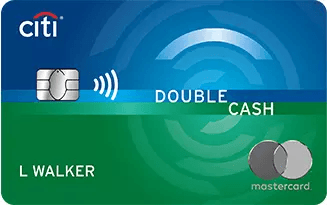
- One catch-all (Citi Double Cash, Wells Fargo Active Cash, Capital One Quicksilver) at 2%
- Dining card (Amex Gold, Sapphire Preferred, Capital One Savor)
- Grocery card (Blue Cash Preferred, Amex Gold)
- Travel category (Chase Freedom Unlimited has 5x travel via UR portal; Sapphire Preferred has 2x direct)
- Optional: rotating-category card (Discover It, Chase Freedom Flex) for quarterly 5%
Six cards covers ~95% of optimization upside. Beyond that, you're managing complexity for diminishing return.
Welcome bonus chasing
Sweet spot: as many as your velocity allows.
Apply quarterly, hold each card 12+ months, downgrade to no-fee versions or close based on retention offers. Two welcome bonuses per year ($1K each) outpaces virtually all category-bonus optimization.
Travel hacking
Sweet spot: 8–15 cards across multiple issuers.
Diversify points (Chase UR, Amex MR, Capital One miles, Citi TY) plus cobranded hotel and airline cards for elite status and free nights. Real diversification requires a high card count because each program's value sits in different cards.
Just want simple
Sweet spot: 1–3 cards.
One catch-all at 2%, optionally one dining/travel card, optionally one balance-transfer / 0% APR card. You'll leave 1–2% on the table compared to optimizers, but you'll never miss a payment or wonder which card to use.
How to Add Cards Safely
If you've decided you want to grow your portfolio, four rules:
1. Stay 5/24-compliant
Even if you're not chasing Chase cards specifically, staying under 5/24 keeps you eligible for the broadest set of issuers. Open at most 4 new cards in any rolling 24 months.
2. Pre-qualify before every application
Saves the inquiry damage on declined applications. Use issuer pre-qualification tools, especially Capital One (triple-pull), Amex (lifetime bonus check), and Citi.
3. Time around major credit events
No new cards in the 12 months before a mortgage application, 6 months before any auto loan or refinance.
4. Hold cards 24+ months minimum
Closing a card within 12 months — especially Chase or Amex — flags you for "bonus chasing" which can cause downstream pop-up jail or velocity blocks. Hold long, downgrade if needed, close as last resort.
FAQ
Will closing cards reduce my score?
Sometimes. Closing reduces total credit limit (raising utilization) and eventually lowers your average account age (closed accounts continue to count for 10 years, then drop off). For specifics, see our piece on closing cards safely.
Does my credit score have a "too many cards" cliff?
No. Score plateaus around 6–10 cards but doesn't actively decline as you add more. Each new card has a small short-term hit (inquiry + new account) that recovers within 12 months.
How many cards do most people in their 30s have?
US average across all adults: ~4 active cards. Among rewards optimizers, 8–15 is common. Among the most aggressive travel hackers, 25+ isn't unusual.
Will issuers reject me for having too many cards?
Direct rejections for total card count are rare. Issuers care more about your relationship with them specifically (how many of their cards you hold, your velocity with them, how profitable you are) than total external card count.
How do I keep track of many cards?
The simplest option is to track everything in one place with a tool built for it. CreditOdds lets you save your cards to a wallet, see each card's annual fee, benefits, and the credits you still need to use, and get a single view of your whole portfolio instead of juggling it in your head. If you prefer to roll your own, a spreadsheet works too: card name, annual fee, opening date, autopay setup, primary use, and key benefits and credits to use each year, updated annually. Either way, set quarterly calendar reminders to put a small charge on sock-drawer cards.
Can I have multiple cards from the same issuer?
Yes. Most issuers allow 5–10 personal cards per applicant. Capital One caps at 2. Chase, Amex, Citi, and BofA all allow more, with their own velocity rules.
Does having lots of cards hurt my apartment rental application?
Generally no. Landlords pull a credit score, not a card count. As long as your score is good and your utilization is low, the number of cards is irrelevant to most rental applications.
Is there a card count where issuers automatically shut down accounts?
Not strictly count-based. Shutdowns are pattern-based — manufactured spend, sudden velocity, suspicious behavior. Holding many cards used responsibly does not trigger shutdowns.
How does my credit score react when I open my 10th card?
Roughly the same way it reacts when you open your 4th: small temporary dip from the inquiry and the new account, recovery in 6–12 months. Total card count itself doesn't compound the impact.
The Bottom Line
Total card count barely matters. Velocity, utilization, payment history, and issuer relationships matter a lot. Three rules cover almost all practical decisions:
- Add cards based on what they earn you, not what your "credit advisor" says is acceptable. Six cards optimized for your spend will earn you more than two generic cards.
- Watch velocity, not total. 4 new cards in 12 months is risky. 12 cards opened over 8 years is fine.
- Audit annually. Cards that no longer earn their annual fee or carry strategic value should be downgraded or closed. Don't accumulate dead weight.
When in doubt, the right card count is the one you can manage without missing a payment. For most people that's somewhere between 3 and 10. For some it's higher. Both are fine.